
Knowledge and advice
Placing a display outdoors: what do you need?
See what your outdoor location requires from the display, placement and management. Pixio helps you assess the suitability of the setup.
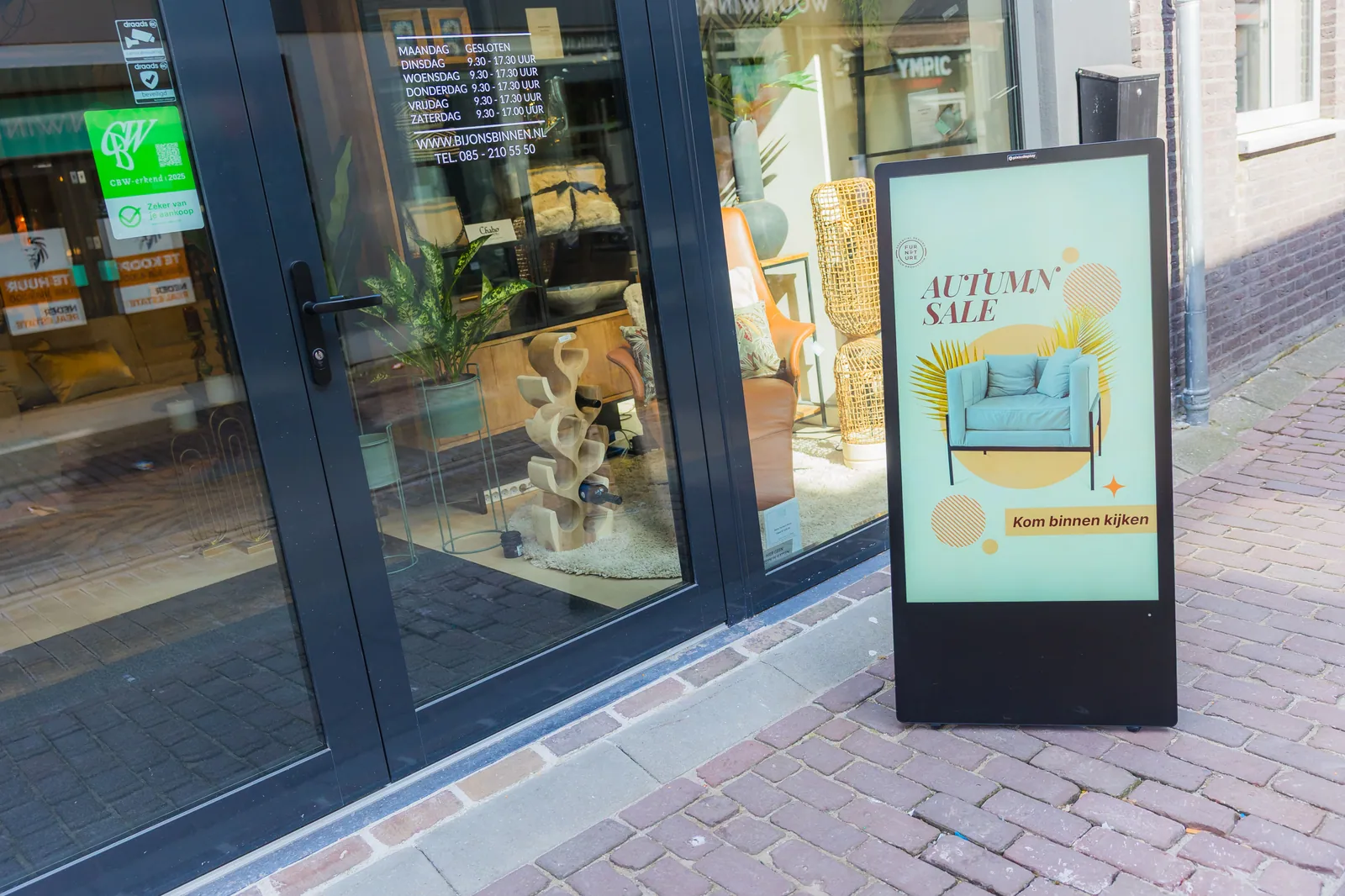
Start with a documented site survey, not with a general model recommendation. Record orientation, direct and changing light, viewing route, distance, shelter, wind, rain, dust, temperature range, vandalism risk, drainage, accessibility and operating hours. Also note ownership of façade and land, public or private space, planned duration and nearby traffic or housing. These conditions together define the project brief and cannot be replaced by a single universal brightness or protection rating.
Only compare versions for which the current product sheet, manual and, if necessary, test report are available. Check brightness, protection rating, operating temperature, material, glass, cooling or heating, connections and maintenance access against the measured location. A higher number is not automatically the best solution, and classifications cover different risks. Have the supplier and technical manager confirm in writing that the complete selected version, including connections and mounting, is suitable for the described situation.
Then work out construction, power, grounding, data range, cable entry, ventilation, condensation control, drainage and access for service. Have foundations, façade fixing, wind load, electrical installation, fire safety and traffic safety assessed by the responsible authorised parties. Describe a safe shut-down route and behaviour in extreme weather or damage. A product classification alone does not prove that the complete installation, cable route and surrounding structure are safe or weatherproof.
Treat consent and regulations as a separate decision route. Check with the owner, municipality and other competent authorities which current rules, notifications, permits, advertising conditions, light restrictions, taxes and deadlines apply to this exact location and application. Record the source, date, handler and outcome. This guide does not provide legal judgement and old municipal examples or general lead times are not used to promise a specific installation.
Before final ordering, build a representative test set-up where possible with the intended content and viewing route. Check visibility in different conditions, start-up, connection, content switching, temperature and fault messages, local fallback and access for management. Then record the final implementation, price, planning, installers, permit status, inspection moments and maintenance responsibility in the central project source. An outdoor route is only released once open technical and legal points have been explicitly closed.