
Knowledge and advice
Tendering digital signage: step-by-step plan for municipalities
From defining needs to contract management: this is how you go through the procurement process for digital signage as a local authority — compliant with the Public Procurement Act and GDPR.
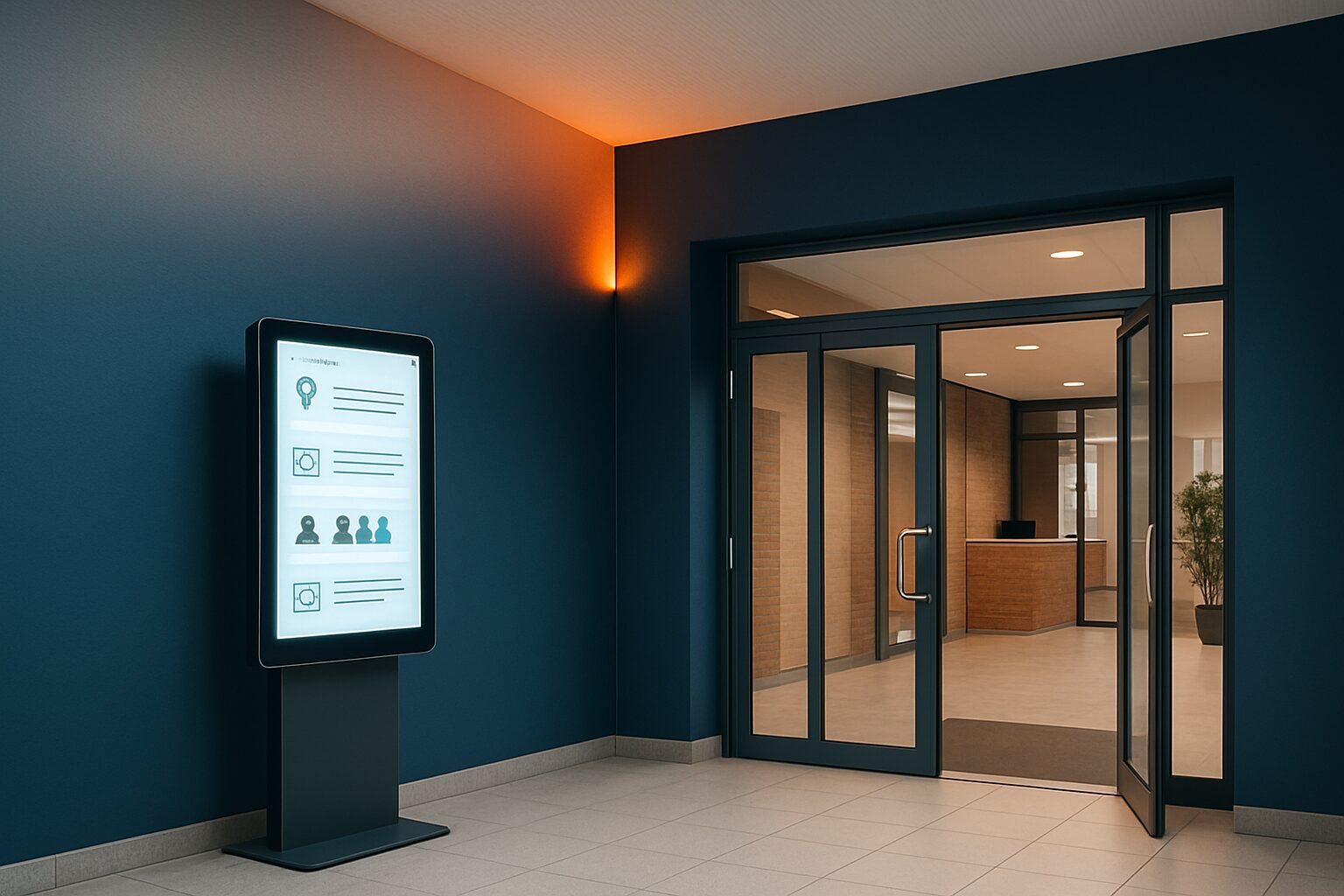
Tendering digital signage: step-by-step plan for Dutch municipalities
A municipality that wants to use digital signage — from information kiosks in the town hall to outdoor displays on the market square — is bound by the Public Procurement Act 2012 and the GDPR. The procurement process consists of five steps: needs assessment, market exploration, choice of procedure and threshold, award and contract management. Which procedure is mandatory depends on the estimated contract value over the full term, including hardware, software and content management.
Step 1 — Determine the need and estimate the contract value
Start with a clear functional specification: what must the system do, where will the screens be placed, and who will manage the content? Only then comes the estimate. Add up the full lifecycle value: purchase or lease of screens, installation, content management software, maintenance and any renewal options.
This is the most underestimated part. A municipality that wants to place five information pillars for four years does not just count the hardware. Content management software, maintenance and any extension option all count towards the estimated value. Artificially splitting a contract to stay below a threshold is not permitted.
As a guideline: a PixioKiosk information kiosk of 32″ costs current price on request (price list Q2 2026). Five units plus four years of software licences and maintenance quickly reaches or exceeds the national threshold values — reason enough to substantiate the estimate carefully.
Step 2 — Choose the correct tendering procedure
The European threshold values determine which procedure is mandatory. For decentralised authorities — including municipalities — as of 1 January 2026 a threshold amount of current price on request (excl. VAT) for supplies and services. This amount has been set for the period 2026–2027 and published on PIANOo, Centre of Expertise for Procurement. If you go above that, a European open or restricted procedure is required, with publication on TenderNed and in the Official Journal of the European Union (TED).
Below the European threshold, the national rules in the Procurement Act 2012 and the Proportionality Guide apply. This provides guidance for choosing between a single-source private procedure (inviting one supplier), a multiple private procedure (two to five suppliers) or a national open procedure. The principles of transparency, equal treatment and proportionality always apply — even below the threshold.
| Estimated value (excl. VAT) | Procedure (municipality, 2026) |
|---|---|
| Approx. current price on request | Single negotiated procedure |
| current price on request | Multiple negotiated procedure or national public |
| From current price on request | Mandatory European tendering |
Indicative thresholds; always consult the municipal procurement and tender policy and the Proportionality Guide for the exact thresholds.
Step 3 — Draw up the technical requirements and award criteria
This is where things often go wrong: councils write too generally or too brand-specifically. Start with functional requirements (brightness, IP rating, operating hours, accessibility) and add technical minimum requirements that are proportionate to the assignment.
For outdoor applications, brightness is a strict requirement. A screen of 400 cd/m² is suitable for indoor use, but not for a sunny outdoor location. A freestanding outdoor display requires at least 3.500 cd/m² to remain readable in bright daylight. Include this as a measurable minimum requirement in the specification, not as a brand name.
Award criteria are usually a combination of price and quality (BPKV — Best Price-Quality Ratio). When considering quality criteria, think of: warranty period, availability of parts, local service, GDPR compliance of the content management software and Total Cost of Ownership (TCO) over the contract period. From experience in our showroom in Montfoort, we see that supplier quotations surprisingly often omit transport costs, warranty extensions and content management — make sure you ask for these items explicitly.
Step 4 — GDPR compliance and DPIA
Digital signage and the GDPR intersect as soon as screens process personal data. That is not automatic: a screen that only plays video without collecting camera or sensor data does not, in principle, process personal data. But as soon as you add interactive touchscreens, anonymous visitor counters or camera integration, the picture changes.
For processing operations that pose a high risk to the rights and freedoms of data subjects — such as systematic monitoring of publicly accessible areas — a Data Protection Impact Assessment (DPIA) is mandatory under Article 35 GDPR. Facial recognition falls under special category personal data and may not, in principle, be used in public spaces without a legal basis. Include an explicit GDPR section in the specifications: which personal data does the system process, on what basis, and how long is the data retained?
Practical advice: choose a content management system whose data storage demonstrably takes place within the EEA and whose supplier can enter into a data processing agreement. Record this as a hard requirement in the specification.
Step 5 — Contract management and evaluation
After award, contract management begins. Include in the contract: SLA standards (maximum downtime per screen), software update frequency, procedure in the event of faults and exit provisions. Municipalities tendering digital signage for several years would do well to include an evaluation point after year one.
Consider leasing as an alternative to buying when the municipality wants to retain flexibility or the investment budget is limited. A PixioKiosk of 43″ is available from current price on request per month (lease, 60 months, price list Q2 2026) — an amount that fits within many municipal operating budgets without capital expenditure. With a term of 60 months, the total lease value does count towards the estimated contract value for threshold determination.
For more information on public sector applications, see the page about digital information kiosks or the PixioDisplay Outdoor product page for outdoor applications.
Conclusion
Start with a careful estimate over the full term — that determines which procedure you need to follow. Then work out the functional requirements, including brightness, GDPR compliance and TCO. The threshold for municipalities in 2026 current price on request (excl. VAT); above that, a European tender is mandatory. Explicitly include GDPR requirements and a DPIA obligation in the specification as soon as the system processes personal data.
This article is a deeper look at the broader theme Digital signage compliance in Dutch municipalities: procurement, GDPR and contracts.
Frequently asked questions
As a municipality, do I always have to use European procurement for digital signage?
Not always. The European public procurement obligation for municipalities only applies from an estimated contract value of € 216.000 (excl. VAT) for supplies and services — the threshold for decentralised authorities in 2026–2027. Below that amount, you follow the national rules in the Public Procurement Act 2012 and the Proportionality Guide. Do count the full contract term value: hardware, software, maintenance and extension options.
How do I correctly estimate the value of a digital signage assignment?
Include the total value over the full contract period: purchase or lease instalments of the screens, installation, content management software, maintenance and any renewal options. Artificially splitting a contract to remain below a threshold value is not permitted under the Dutch Public Procurement Act 2012.
When is a DPIA mandatory for digital signage?
A DPIA is required as soon as the system processes personal data in a way that creates a high risk — think of systematic monitoring of publicly accessible areas with cameras or sensors. A screen that only plays video without a camera or visitor counter in principle processes no personal data and does not require a DPIA.
May I specify a particular brand or model in the specification?
No, brand names in a specification are generally not allowed unless you add 'or equivalent'. Formulate requirements functionally and measurably: brightness in cd/m², IP rating, operating time per day, warranty period. That protects the municipality legally and guarantees sufficient market competition.
Does a lease amount count towards the estimated contract value?
Yes. In the case of lease, you count the total lease payments over the full contract term for the threshold calculation. A lease of € 42 per month for 60 months results in an estimated value of € 2.520 per screen — with larger numbers of screens this quickly adds up and can affect the threshold.