
Knowledge and advice
Video walls: technology, costs and applications explained
What is a video wall, what does it cost and where should you use it? Read all about LED vs LCD, pixel pitch, installation and when separate displays are a smarter alternative.
Video walls: technology, costs and applications explained
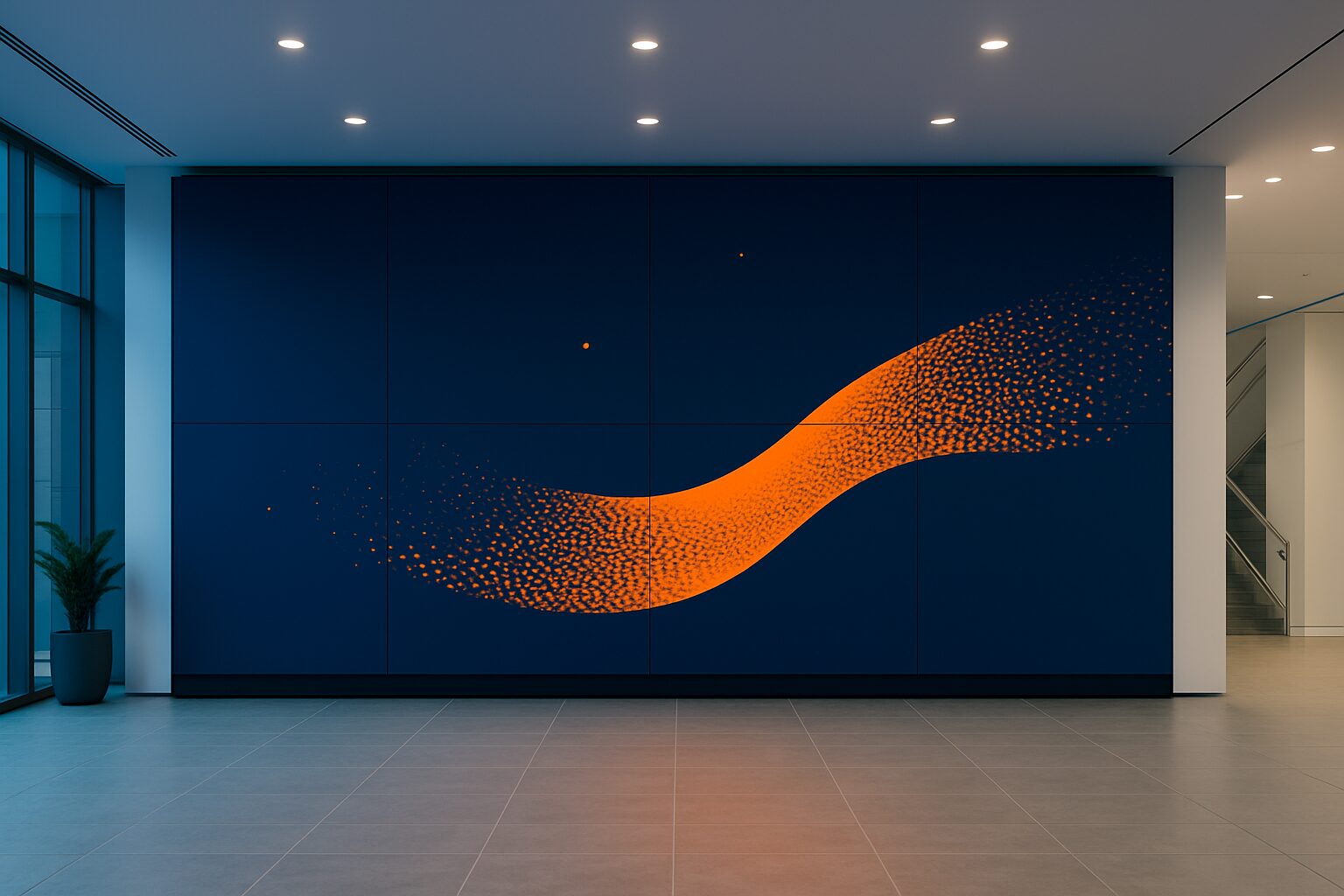
A video wall is a configuration of multiple displays or LED panels that together form one seamless image surface. The technology is available in two main forms: LCD panels with narrow borders (bezel) and direct-view LED tiles without visible seams. The choice between the two depends on viewing distance, ambient light, budget and duration of use. Installation and content management costs are at least as important as the hardware itself.
LCD vs direct-view LED: the two main technologies
LCD video walls consist of commercial screens with a bezel of 1–3,5 mm. They are affordable and produce sharp images at short viewing distance. The drawback: when viewed close up, you can see the seams between the panels. That is acceptable in a meeting room, but distracting in a retail environment.
Direct-view LED panels have no bezel. The panels fit seamlessly together and deliver a fully continuous image. LED is also significantly brighter — suitable for spaces with a lot of ambient light. The downside is a higher purchase price and a larger minimum viewing distance due to the pixel pitch.
A third option — rear projection — is still used in control rooms, but has largely been replaced by LED. For most B2B applications in the Netherlands, the choice is between LCD and direct-view LED.
| Feature | LCD video wall | Direct-view LED |
|---|---|---|
| Seamless image | No (bezel 1–3,5 mm) | Yes |
| Brightness | 400–700 cd/m² | 800–5.000 cd/m² |
| Minimum viewing distance | < 1 m | Depending on pixel pitch |
| Purchase price (entry level) | Lower | Higher |
| Lifespan | 50.000–70.000 hours | 60.000–100.000 hours |
| Modularly expandable | Limited | Yes |
Pixel pitch: the key specification for LED video walls
Pixel pitch is the distance in millimetres between two adjacent pixels on an LED panel. The smaller the pitch, the higher the pixel density and the sharper the image at short distance — but also the higher the price.
The common rule of thumb: the minimum viewing distance in metres is roughly equal to the pixel pitch in millimetres. A P4 panel therefore requires a minimum viewing distance of 4 metres; a P2,5 panel at least 2,5 metres. If the audience sits further away, you are paying for resolution that nobody can see.
For indoor events and trade fairs, P2,6–P3,9 is the most commonly used range. For outdoor applications with a viewing distance of 10 metres or more, P5–P10 is sufficient. Choose the pixel pitch based on the shortest expected viewing distance in your setup — not on what the supplier offers as 'premium'.
What does a video wall cost?
The hardware is only part of the total investment. For a complete installation, also include mounting, cabling, a video processor and content management software.
For an entry-level LED video wall of 3×2 metres, the hardware price internationally starts at around $18.000–$27.000 (P2,5, source: market prices 2025). Installation costs are usually 15–30% of the hardware costs. An all-in quote for a medium-sized installation therefore quickly rises to current price on request or more.
For smaller or temporary applications — a trade fair stand, a retail location, an event — a combination of separate commercial displays or a rental solution is often more cost-effective. Pixio Display supplies displays with an integrated Android 13/14 computer for trade fair and event setups: no separate media player (elsewhere current price on request per screen) or laptop needed, and ready to use within minutes. That is the biggest practical difference at trade fairs compared with separate TV + laptop setups.
At Summit, more than 50 PixioDisplays were used at one event — a scalable approach in which each screen functions independently without a central video processor or complex wiring.
Applications: when do you choose a video wall?
A video wall is the right choice when you need one large, seamless image surface that must be readable from a distance or visually dominate a space. Think of:
- Control rooms and alarm centres: multiple data streams visible at once, 24/7 operational. Here, LED is the standard because of its high brightness and long lifespan.
- Retail and shop window: a floor-to-ceiling LED wall attracts attention and strengthens brand experience. Viewing distance is often 3–6 metres, so P3–P4 is the sweet spot here.
- Events and trade fairs: portable LED walls are quick to assemble and dismantle. At viewing distances of 8 metres or more, P5–P6 is sufficient and you save significantly on hire costs.
- Meeting rooms and boardrooms: here, an LCD video wall (2×2 or 3×2 panels) is often sufficient. The viewing distance is short and the budget is more limited.
- Lobbies and reception areas: a digital reception setup with one or two large displays is already enough for many organisations — and significantly easier to manage than a full video wall.
Start with a video wall if the minimum image width is greater than 2,5 metres and a seamless image is functionally necessary. If that is not the case, separate commercial displays deliver the same result at lower cost and with less installation complexity.
Installation: what to look out for
Installing a video wall requires more preparation than a single display. Before the quotation stage, check at least these four points:
- Load-bearing capacity of the wall or structure: LED panels weigh 15–30 kg/m²; a 4×2 metre wall can already represent 120–240 kg.
- Ventilation: LED panels generate heat. Ensure free air circulation behind the structure to prevent overheating.
- Cabling and signal processing: a video processor or wall controller sends the content to all panels at the same time. This is a separate cost item that is missing from many quotes.
- Warranty and maintenance: modular LED panels are hot-swappable — you can replace a faulty panel without affecting the rest of the wall. Always ask about the warranty terms per panel and the availability of spare parts.
In the showroom in Montfoort, customers regularly compare quotes from several suppliers. Transport, warranty extension and content management are often conspicuously absent. Always include those items in your total budget.
Conclusion: video wall or separate displays?
Choose a video wall if you need a large, seamless image surface with a viewing distance of at least 2–4 metres and a permanent purpose. Choose separate commercial displays — or a rental solution — if the application is temporary, the viewing distance is short, or the budget is limited.
Do you want to know which display solution suits your specific situation? View the application page for trade fair and event displays or schedule a visit to the showroom in Montfoort to compare different setups live.
Frequently asked questions
What is the difference between an LED video wall and an LCD video wall?
An LED video wall consists of direct-view LED panels without visible seams between the tiles. An LCD video wall consists of multiple commercial screens with a narrow border (bezel) between them. LED is brighter and seamless, but more expensive. LCD is more affordable and suitable for short viewing distances, such as meeting rooms.
What is pixel pitch and how do I choose the right value?
Pixel pitch is the distance in millimetres between two adjacent pixels on an LED panel. The rule of thumb: pixel pitch (mm) ≈ minimum viewing distance (m). At a viewing distance of 4 metres, a P4 panel is sufficient. If you choose a finer pitch than necessary, you pay for resolution the audience cannot see.
What does a video wall cost including installation?
The hardware price for an entry-level LED video wall of 3×2 metres starts internationally at around $18.000–$27.000. Installation costs are typically 15–30% of the hardware price. In addition, budget for a video processor, cabling, content management software and warranty. A complete medium-sized installation quickly comes to €30.000–€60.000 or more.
When are standalone displays a better alternative to a video wall?
Separate commercial displays are more cost-efficient for temporary applications (trade fairs, events), short viewing distances or a limited budget. They are easier to install, manage and move. A seamless image is not a functional requirement for most retail and event applications.
How long does an LED video wall last?
A well-built LED video wall has a lifespan of 60.000 to 100.000 operating hours. At 16 hours of use per day, that is 10–17 years. Modular panels are hot-swappable: you replace a faulty panel without affecting the rest of the installation, which keeps maintenance costs low.