
Knowledge and advice
Outdoor display permit: when do you need one?
When do you need a permit for an outdoor display? Read when an environmental permit or APV exemption is required and how to arrange it.
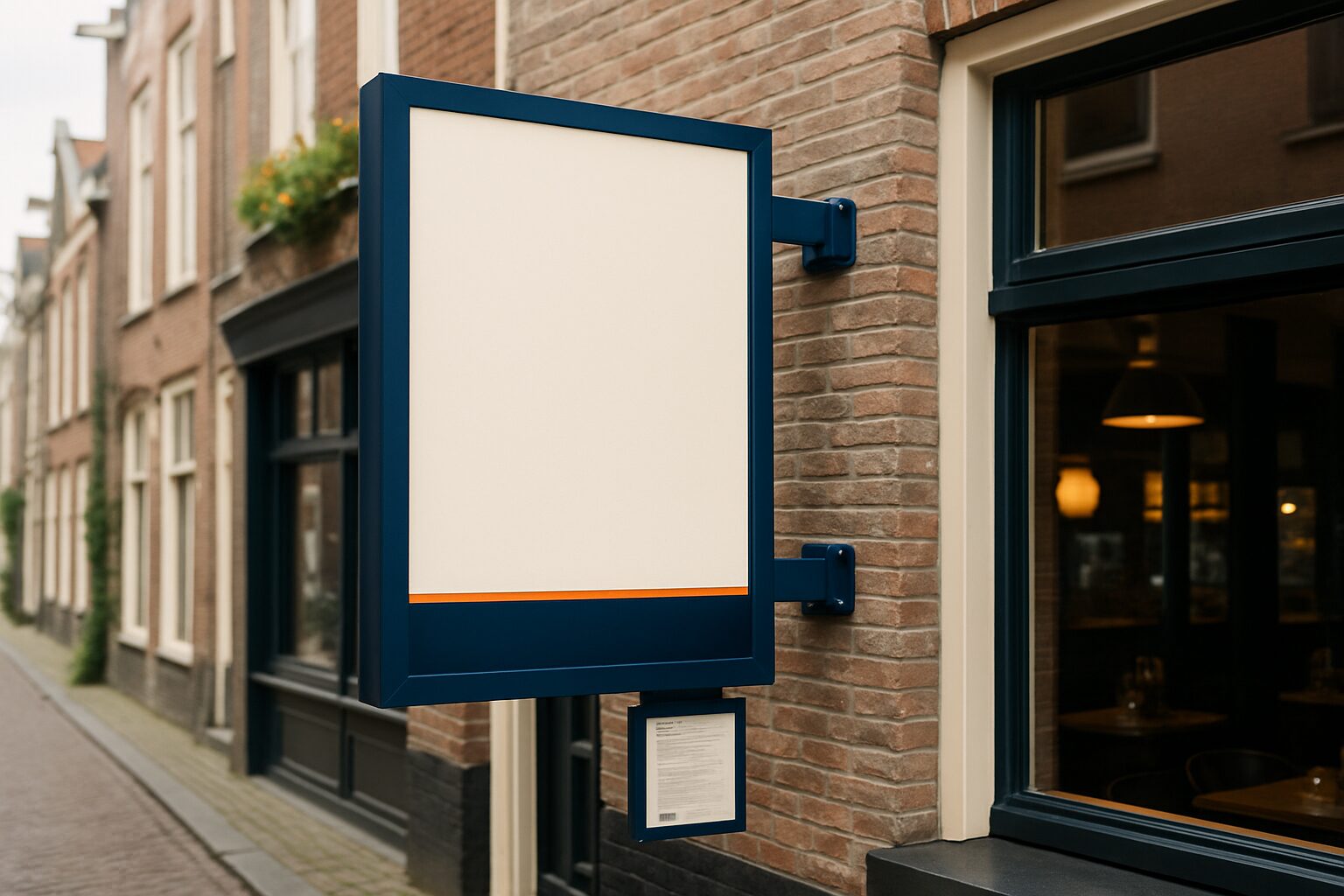
Outdoor display permit: when do you need one?
For a outdoor display in most cases, you need a permit. Whether that is an environmental permit, an APV exemption or both depends on the location, the size of the screen and the municipality. Without the right permission, you risk a fine or enforced removal. This article explains when which permit applies.
Two different permits: planning permission and APV
There are two legal frameworks that are relevant for outdoor displays. First, the environmental permit (via the Spatial Planning Act / Environmental and Planning Act), which concerns the physical placement of a structure or advertisement on a building. Secondly the APV exemption (General Local By-law), which is regulated by the municipality and covers advertising in public spaces.
Some situations only require the APV exemption. Others require both. Always check with your own municipality which framework applies — the rules differ from city to city.
When is a planning permit required?
An environmental permit is usually required if the display is attached to a building or if a free-standing structure is placed. Think of a screen above the entrance to your restaurant or a totem on the terrace. From a certain surface area — often 0,5 m² or more — a permit is required, but this varies by municipality and zoning plan.
In protected historic townscapes, stricter requirements apply. Municipalities such as Amsterdam and Utrecht apply additional aesthetic criteria. Consult the Environment and Planning Portal to check whether your situation requires a permit.
When is an APV exemption needed?
The APV regulates advertising in public spaces. If you want to install a screen that is visible from public space — on a facade, on a terrace or on municipal land — you must apply to the municipality for an APV exemption. This also applies to temporary displays, for example for an event or seasonal promotion.
Important: an APV exemption is not automatic. Municipalities may refuse on the basis of aesthetics, road safety or light nuisance. Some municipalities prohibit moving images along busy roads to prevent distraction. For the specific rules in your city, see the cluster article Outdoor digital signage and the General Local By-law (APV).
Concrete example: a café owner in Utrecht
Suppose you run a café in the city centre of Utrecht and want to hang a 55 inch outdoor display next to the entrance. Utrecht is a protected townscape area. In this case you need both a permit (for fixing it to the building) and an APV exemption (for the advertising expression facing the public space).
The processing time for a planning permission application is legally a maximum of 8 weeks, with a possible extension of 6 weeks. So allow at least 2 months before you may hang the screen. Plan this well ahead of your opening or campaign.
Exceptions: when do you not need a permit?
There are situations in which you may place an outdoor display without a permit:
- The screen is fully on private property and is not visible from public space.
- The screen falls under the category of 'permit-free construction' as described in the Environmental Permitting Decree (Bor) — this applies to small advertising displays on the front façade up to a certain surface area.
- The municipality has included a specific exemption in the APV for temporary advertising expressions shorter than a certain number of days.
Exemption from a permit does not mean exemption from rules. Aesthetic requirements and local public order by-laws on light intensity and moving images may still apply.
Practical steps to apply for a permit
- Check the zoning plan via ruimtelijkeplannen.nl — check whether advertising is permitted at your location.
- Use the Environmental Desk at omgevingsloket.nl to determine which permits are required.
- Contact the municipality for the APV exemption — this is handled via the Permits or Public Space department.
- Request technical specifications of the screen: dimensions, brightness (nits) and whether it shows moving images. Municipalities ask for this as standard.
- Submit both applications at the same time to avoid delay.
Pixio Display, a supplier of digital signage in the Netherlands and Belgium, advises customers by default to check the permit situation before purchase. This prevents a screen from being bought that ultimately may not be installed.
Conclusion
Whether you need a permit for an outdoor display depends on three factors: the location (public space or private land), the mounting (attached to a building or freestanding) and the municipality. In most practical situations for restaurant and café owners, both an environmental permit and an APV exemption are required. Allow for a lead time of at least 8 weeks and apply for both permits at the same time.
Want the full picture — from screen selection to permit and installation? Then read the pillar article Outdoor digital signage: everything about choosing, placing and permits.
Frequently asked questions
Do I always need a permit for an outdoor display?
Not always, but in most cases yes. If the screen is visible from public space or attached to a building, a planning permit and/or APV exemption is usually required. If the screen is entirely on private property and not visible from the street, it may be permit-free.
How long does it take to apply for a permit for an outdoor screen?
An environmental permit has a statutory decision period of 8 weeks, with a possible extension of 6 weeks. An APV exemption varies by municipality, but allow 2 to 6 weeks. Apply for both at the same time to reduce the total lead time.
What happens if I place an outdoor display without a permit?
The municipality can impose an order subject to penalty or administrative enforcement, which means you must remove the screen at your own expense. You also risk a fine. In some municipalities, illegal advertising is actively enforced.
Do special rules apply to a display in a protected townscape?
Yes. In protected city or village views, additional aesthetic requirements apply. Municipalities such as Amsterdam and Utrecht assess advertising more strictly on material use, size and appearance. Always ask the municipal aesthetics committee for advice in advance.
Do I also need a permit for a temporary outdoor display?
Often yes. Many municipalities require an APV exemption even for temporary advertising displays, even if the screen is only in place for a few weeks. Some municipalities have an exemption for displays shorter than a certain number of days — check this in advance with your municipality.