
Knowledge and advice
Digital displays vs print materials: ROI and impact in retail
Digital displays versus print materials in retail: concrete ROI figures, cost analysis and impact data. Find out when switching pays for itself.
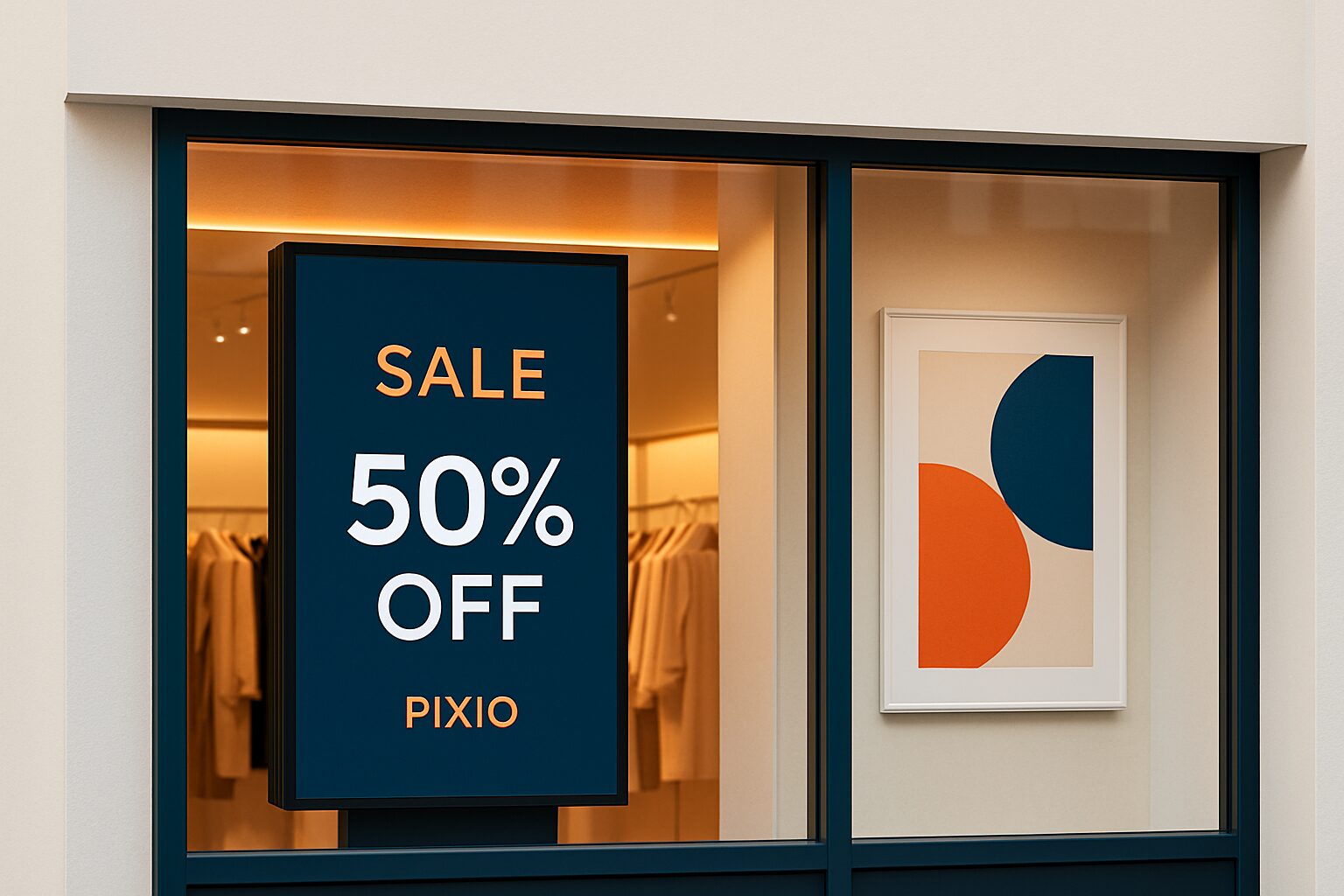
Digital displays vs print materials: ROI and impact compared in retail
Digital displays replace print materials in retail on two fronts at once: they cut structural print costs by 30–50% and increase sales of promoted products by an average of 20–32%. Print materials have a lower barrier to entry but generate recurring costs with every campaign change. For medium-sized retail chains with multiple branches and regularly changing promotions, a digital setup typically pays for itself within 12 to 24 months.
What does print material really cost?
Print seems cheap. A poster costs from current price on request per piece for bulk orders, a banner between current price on request and current price on request But that price is not the full bill.
Every campaign change again requires design, print, distribution and placement. For a chain of ten branches with four campaign changes per year, those recurring costs quickly run into thousands of euros — without you having bought a single screen. Moreover, a printed poster is static: you cannot show a time-limited promotion, adjust a price or automatically activate a seasonal offer.
Print does have advantages: no power, no hardware investment, no content management. For a one-off campaign or a location without electricity, it is still a valid choice.
What does a digital display deliver?
The impact of digital signage on retail turnover has been widely studied. Dynamic displays attract 400% more views than static signage and deliver an ad recall rate of 83% — compared with approx. 50–60% for static print. Retailers who use digital signage strategically see an average sales increase of 32% on promoted products.
Specifically for shop window communication shows POPAI/3M study carried out at four Dutch retail locations — with more than 24.000 shopper observations — that 85% of passers-by rated the shop appearance more positively after the installation of a digital shop window screen. 64% spontaneously remembered a specific promotional message. 2,5% of all passers-by entered the shop immediately because of what they saw on the screen.
In addition to revenue growth, retailers save 30–50% on print and production costs after the switch to digital signage. That saving is structural and grows with the number of campaign changes per year.
Head-to-head: a fair comparison
| Criterion | Print material | Digital display |
|---|---|---|
| Initial costs | Low (current price on request per item) | Medium to high (current price on request hardware) |
| Recurring costs | High (repeated for each campaign) | Low (content update = free) |
| Flexibility | None (static after printing) | High (real-time adjustable) |
| Ad recall | ~50–60% | ~83% |
| Revenue impact of promoted items | Limited measurability | Average +20–32% |
| Payback period | No investment, but no setup | 12–24 months |
| Environmental impact | Paper and ink consumption | Display energy consumption |
| Suitable for multiple branches | Logistics complex | Central management via CMS |
The table makes one thing clear: print wins on entry costs, digital wins on everything that follows.
When do you choose digital, when print?
Choose a digital display if:
- You have more than two campaign changes per year
- You want to show the same content at multiple locations
- You want to communicate real-time prices, offers or time-bound content
- Your shop window or retail space is visible to passers-by you want to convert
Choose print if:
- It concerns a one-off, long-term campaign
- Your location has no power or network
- You have no budget for hardware investment and want to test
The two do not exclude each other. A hybrid approach — digital for dynamic content, print for permanent brand elements — works well in practice for many medium-sized retail chains.
Concrete case: Dunkin' Donuts and the window screen
Dunkin' Donuts chose the PixioDisplay Window for their shop window communication. Choosing a digital shop window screen enabled them to switch promotions, seasonal products and time-limited offers without print costs. That is exactly the use case where digital pays back fastest: high campaign frequency, visible shop window location, changing offer.
The PixioDisplay Window Full Sun delivers 3.000 nits of brightness — sufficient for shop windows in direct sunlight — and is available from current price on request (43″, single-sided, price list Q2 2026). That is comparable to the annual print costs of an active retailer with four campaign changes per year. From year two onwards, content costs are virtually zero.
How do you calculate the payback period?
The standard ROI formula for digital signage:
ROI (%) = [(Turnover growth + Cost savings − Total investment) / Total investment] × 100
A practical calculation example for a retailer with five branches:
- Hardware: 5 × PixioDisplay Window Full Sun 43″ = 5 × current price on request = current price on request
- Print costs saved per year (4 campaigns × 5 locations × average current price on request): current price on request/year
- Revenue growth on promoted products (conservative +15% on a product group of current price on request/year): current price on request/year
- Total annual benefit: current price on request
- Payback period: ±8,5 months
This is a conservative calculation. The actual savings on print costs are often higher if you also include design and distribution costs. Use this model as a starting point and adapt the figures to your own situation.
Do you want the exact prices for your setup? View the full price list or schedule a showroom visit in Montfoort to see the displays live.
For more background on how to measure footfall and conversion after placing a display, read the knowledge base article Digital shop windows and retail displays: the complete retail guide.
Frequently asked questions
How quickly does a digital display pay for itself compared with print?
For medium-sized retailers with regularly changing campaigns, the average payback period is between 12 and 24 months. If you also include the printing costs saved, for active campaign users this can drop below 12 months. The more often you change content, the faster the display pays for itself.
How much do I save on print costs if I switch to digital signage?
Retailers report on average 30–50% lower advertising costs after switching from print to digital. That saving is structural: every campaign change you implement digitally no longer involves printing, distribution or placement costs.
Does a digital display have more impact than a poster in the shop window?
Yes. POPAI/3M research in Dutch shops shows that 85% of shoppers rated the store appearance more positively after a digital shop-window screen was installed. The ad recall of digital displays is around 83%, compared with 50–60% for static print. Dynamic content also attracts 400% more views than still material.
So is print completely outdated for retail?
No. Print remains useful for one-off, long-running campaigns, locations without power or a very limited budget. For retailers with multiple branches and regularly changing promotions, digital is cheaper and more effective in the long run. A hybrid approach — digital for dynamic content, print for permanent elements — works well for many chains.
What type of display is suitable for a window display in full sun?
For shop windows in direct sunlight, you need at least 2.000–3.000 nits of brightness. A standard consumer TV (±300 nits) or indoor display (400 nits) will then be unreadable. The PixioDisplay Window Full Sun delivers 3.000 nits and is available from €1.780 for a 43″ model (price list Q2 2026).