
Knowledge and advice
Outdoor display in winter: frost, condensation and heating
What does frost do to an outdoor display? Learn which operating temperature, IP rating and anti-condensation heating you need for reliable operation in winter.
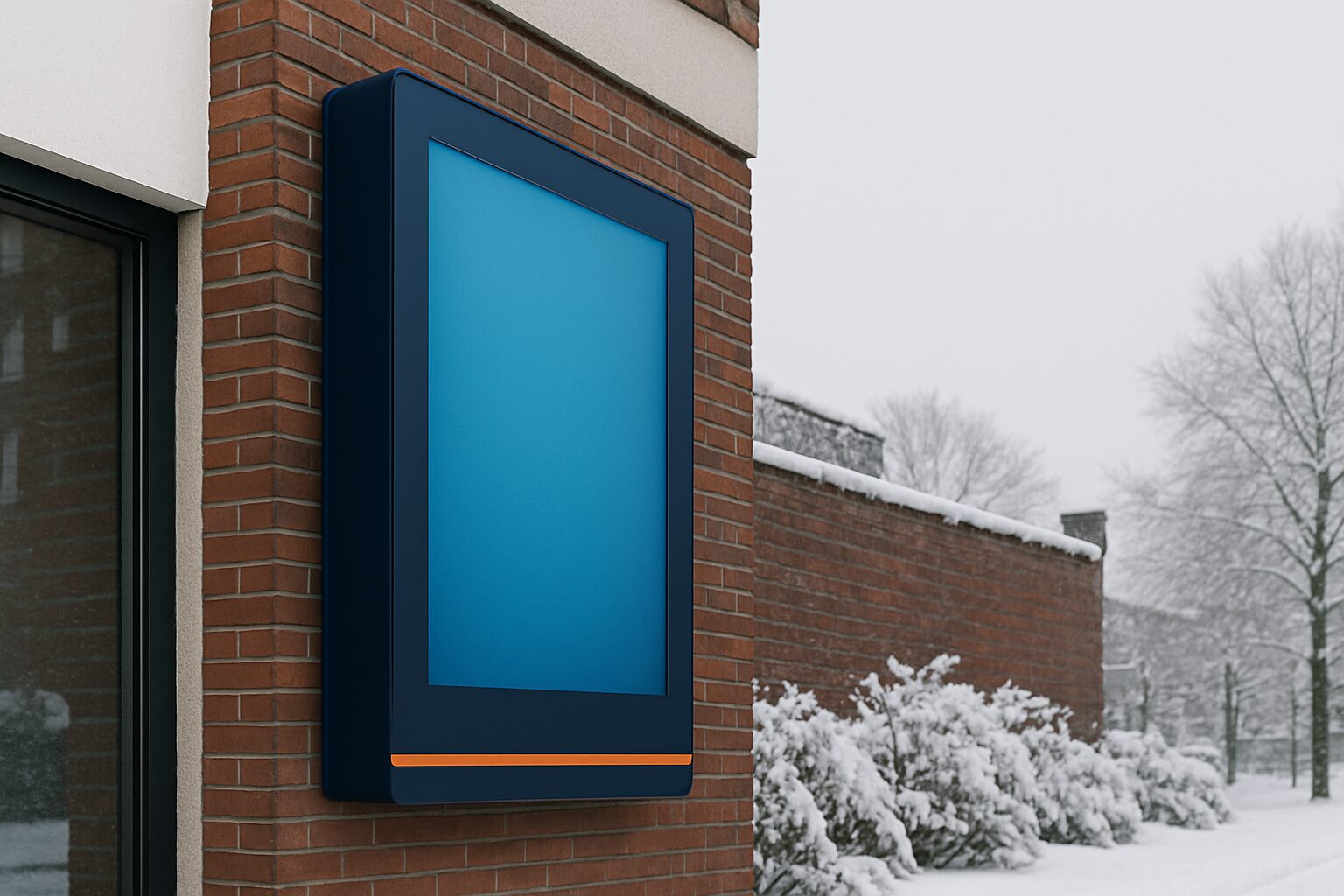
Outdoor display in winter: frost, condensation and heating
A professional outdoor display works outside all year round, even in frost. Three specifications are decisive for this: an operating temperature range of at least −20 °C to +60 °C, an IP rating of at least IP65 and an integrated anti-condensation heater. If one of these three is missing, you risk condensation damage in winter, frozen liquid crystals or a display that switches itself off. This article explains what technically happens at low temperatures and how to choose the right specifications.
Why frost is a problem for LCD displays
LCD stands for Liquid Crystal Display: the panel contains a liquid crystal layer between two glass plates. In persistent cold, that liquid becomes more viscous and the image responds more slowly. If the temperature drops low enough, the layer can freeze — resulting in permanent panel damage.
Consumer TVs are most vulnerable here. They are designed for indoor use and rarely reach an operating temperature below −10 °C. Commercial outdoor displays are built differently: they combine heated enclosures with panels specified for wider temperature ranges.
Weeronline reports based on KNMI data that the Dutch winter averages 34 frost days covers (climate period 1995–2024), with night-time temperatures averaging 1,3 °C and dropping below −5 °C on around eight days. That is exactly the range where an under-specified display fails.
Operating temperature: the spec that counts
The operating temperature is listed in the technical specifications of each display. Always look at the operating temperature, not the storage temperature — those two differ greatly.
A good outdoor display has an operating range of −20 °C to +50 °C or wider. Some commercial models even specify −30 °C to +50 °C for use in colder climates. Check this figure explicitly: there are models on the market sold as "outdoor" but specified only down to −10 °C.
| Display type | Typical working range | Suitable for NL winter? |
|---|---|---|
| Consumer TV | 0 °C to +40 °C | No |
| Semi-outdoor display | −10 °C to +50 °C | Limited |
| Fully outdoor display | −20 °C to +60 °C | Yes |
| High-end outdoor display | −30 °C to +60 °C | Yes, even in severe frost |
The PixioDisplay Outdoor (free-standing or on façade, 3.500 cd/m²) is available from current price on request for 49″ (price list Q2 2026) and is certified for continuous outdoor use, including the Dutch winter climate.
Condensation: the silent killer for electronics
Condensation is a greater risk than frost itself. It occurs when warm, moist air comes into contact with a cold surface. For outdoor installations, this happens most strongly in spring and autumn, when the temperature differences between day and night are greatest.
The same principle works inside the housing of a display: if the inside cools down at night and warms up during the day, moisture condenses on circuit boards and connectors. That leads to short circuits, corrosion and early failure — without you seeing it coming from the outside.
A professional outdoor display therefore has a anti-condensation heating: a heating element that switches on automatically as soon as the temperature or humidity reaches a threshold value. Combined with a thermostat, this keeps the indoor temperature stable, even if the display is not playing active content at night.
IP rating: at least IP65 for outdoor use
An IP rating describes protection against dust and water according to IEC 60529 standard. For an outdoor display in the Netherlands, the IP65 as the absolute minimum: completely dustproof and resistant to water jets from any direction.
In locations with heavy rain, snow or strong wind, IP66 is better. IP66 offers the same dust protection but withstands more powerful water jets. The difference lies in the sealing of cable entries, hinges and ventilation openings — precisely the points where condensation and meltwater enter.
Note: a high IP rating does not guarantee good thermal management. Two displays with the same IP65 rating can differ greatly in how they handle temperature changes, depending on the quality of the enclosure construction and the heating system.
Read more about IP classifications in the knowledge base article IP ratings explained: from IP54 to IP67.
What to do when starting up after a cold night
A well-designed outdoor display starts up itself once the internal temperature is within the safe range. Some models have a warm-up routine: the display waits to activate the panel until the anti-condensation heater has brought the enclosure to minimum temperature.
Practical advice for installations in the Netherlands:
- Keep the display on 24/7 or make sure the heating remains active even when the screen is switched off. A display that is on continuously generates its own heat and reduces the risk of condensation.
- Check the cable entry on the seal. That is the most common leak point for moist air.
- Plan annual maintenance before winter: check seals, ventilation openings and the heating element.
- Choose a location with some shelter if possible — a canopy or roof edge reduces direct snow load on the panel.
If you are unsure about the correct setup, you can showroom appointment made in Montfoort to compare the technical specs of specific models.
Conclusion
An outdoor display can survive the Dutch winter without any problems — if you choose the right specs. Start with an operating temperature range of at least −20 °C to +60 °C, an IP65 or IP66 rating and an integrated anti-condensation heater with thermostat. Never use a consumer TV or a semi-outdoor model without an explicit winter specification.
For a full overview of installation, permits and technical requirements, see the pillar article Outdoor digital signage: everything about choosing, placing and permits.
Frequently asked questions
Can an outdoor display stay outside all year round, even in frost?
Yes, provided the display has an operating temperature range of at least −20 °C to +60 °C and an integrated anti-condensation heater. Always check this in the technical specifications — not all 'outdoor' displays are certified for severe frost.
What is the risk of condensation for an outdoor display?
Condensation occurs when humid air comes into contact with cold surfaces inside the enclosure. This can lead to short circuits and corrosion on circuit boards. A heating element with thermostat prevents this by keeping the internal temperature stable, even when the display is not active at night.
What minimum IP rating do I need for an outdoor display in the Netherlands?
IP65 is the absolute minimum: completely dust-tight and resistant to water jets from any direction. At locations with heavy rainfall or strong wind, IP66 is recommended. However, a higher IP rating does not guarantee better thermal management — that depends on the quality of the heating system.
Should I switch off an outdoor display in winter to prevent damage?
No, quite the opposite. A display that stays on continuously generates its own heat and reduces the risk of condensation. If you do switch the display off, make sure the anti-condensation heater remains active even when the screen is off.
What does an outdoor display cost that also works reliably in winter?
The PixioDisplay Outdoor, certified for continuous outdoor use including the Dutch winter climate, starts from € 4.900 for 49″ (price list Q2 2026). Request the full price list for current options and sizes.